


Chief Minister A Revanth Reddy has made a significant appeal to the Union government. He is seeking a crucial exemption for education-related borrowings. This request specifically targets the Fiscal Responsibility and Budget Management limits.
The goal is to fund major educational development in Telangana. A key project involves constructing 105 Young India Integrated Residential Schools. This ambitious plan requires substantial financial investment.
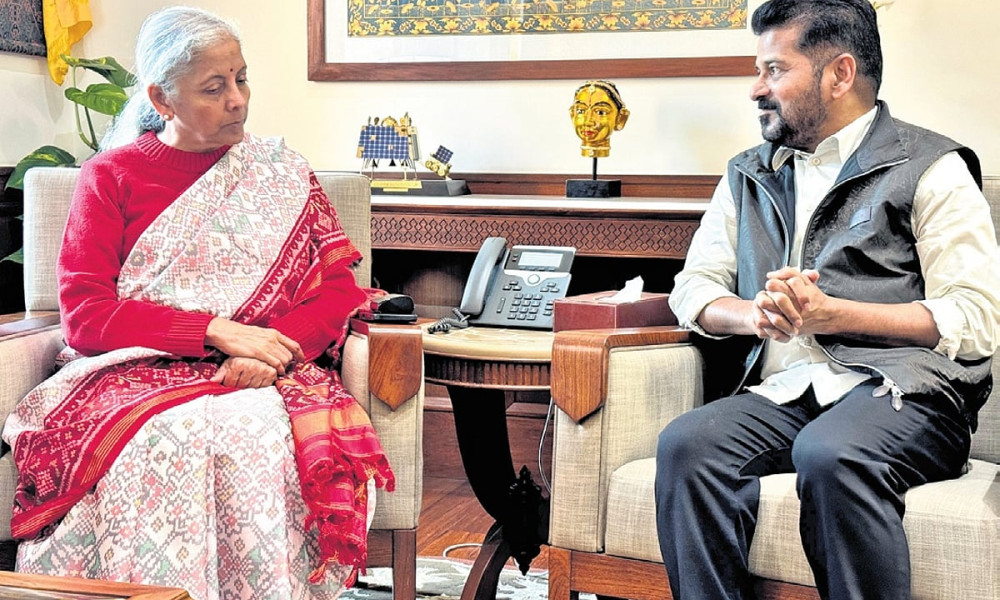
Revanth Reddy met Union Finance Minister Nirmala Sitharaman in Delhi. He presented the state’s vision for strengthening the education sector. The focus is on providing quality education to students from backward communities.
The proposed YIIRS schools are central to this vision. Each school would cater to 2,560 students from classes five through twelve. They are planned for all 105 Assembly constituencies in the state.
In total, these schools could benefit 2.7 lakh students directly. Furthermore, they are designed to act as educational hubs. This setup would indirectly benefit lakhs more students in nearby government schools.
The financial requirement for the schools alone is Rs 21,000 crore. An additional Rs 9,000 crore is needed for modern labs and infrastructure. This investment would upgrade junior colleges, degree colleges, and technical institutions.
The chief minister framed this expenditure as a vital investment. He urged the Centre to view it as human resource development. Therefore, he requested the FRBM exemption for loans raised through a Special Purpose Centre.
Nirmala Sitharaman responded positively to the state’s vision. She praised the proposal to establish the YIIRS network. She requested more detailed information on the proposed SPC structure.
Revanth Reddy also held a separate meeting with Union Education Minister Dharmendra Pradhan. In this discussion, he pushed for more central educational institutions in Telangana. His requests were specific and strategic.
He urged the Centre to sanction an Indian Institute of Management for Hyderabad. This would be a major boost for higher education in the state. It aligns with the broader goal of educational excellence.
Additionally, he sought Kendriya Vidyalayas and Jawahar Navodaya Vidyalayas. These schools would be established in identified areas across Telangana. This move aims to expand access to quality central government schooling.
The twin meetings underscore the state’s focused push on education. The FRBM exemption request is a critical part of this strategy. It would provide the financial flexibility needed for large-scale projects.
Telangana’s plan is comprehensive, targeting both school and higher education. The construction of state-of-the-art residential schools is a flagship initiative. Modernizing existing college infrastructure is another key pillar.
All these efforts are geared toward a single objective. The state aims to transform its educational landscape. The success of this plan now partly hinges on central government support.
The outcome of these requests will be closely watched. An FRBM exemption would set a notable precedent. It could reshape how educational investments are financed across states.