


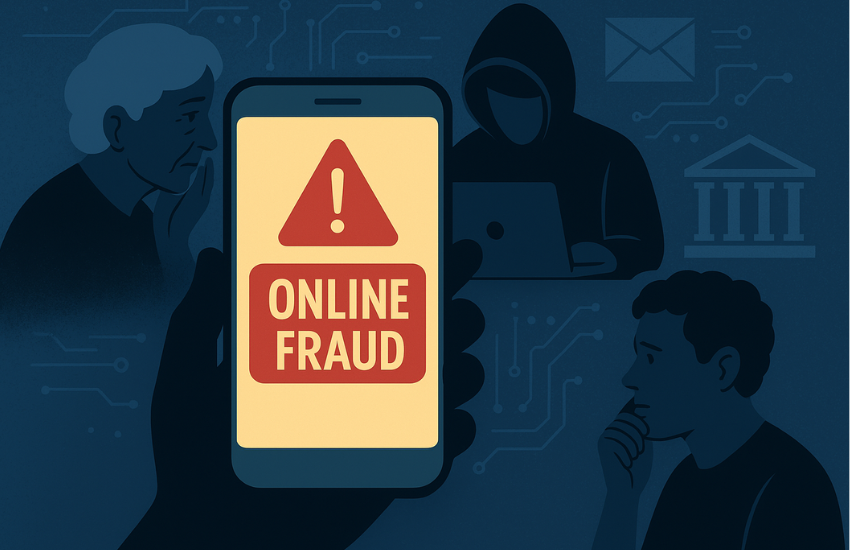
The rise of digital payments in India has made banking faster and more convenient — but it has also opened the door to a growing wave of cyber-fraud. Over the past few months, several cities across the country have reported a sharp increase in scams targeting elderly citizens, students, and new digital banking users. Criminals are using fake apps, fraudulent loan or investment schemes, and misleading phone calls to gain access to bank accounts.
How Scammers Trick People
Cybercriminals no longer rely on just one technique. They now use social engineering — the art of manipulating emotions such as fear, urgency, greed, or trust. Some of the most common fraud methods are:
Fake Investment Plans promising high returns in a short time.
KYC Update Calls claiming your bank account will be blocked.
Fake Customer Care Numbers listed online.
Loan App Fraud, where high interest and extortion follow after registration.
UPI Payment Scams that trick users into sending money unknowingly.
Because these scams appear professional and urgent, even educated or experienced users are falling victim.
Why This Trend Is Concerning
Cyber-fraud is not just an online crime — it affects financial confidence.
When people lose money from their bank accounts, many become afraid of using:
UPI Payment Apps
Net Banking
Online Investment Platforms
This can slow down India’s digital adoption, especially among older users and rural areas. Since the government is encouraging more digital transactions, this rising fraud trend is a major concern for the financial ecosystem.
How to Protect Your Money
To stay safe, follow these simple but powerful steps:
Never share OTP, PIN, CVV, or passwords with anyone — not even if they say they’re from the bank.
Do not click links received on WhatsApp, SMS, or email from unknown sources.
Always download apps from the official Play Store or App Store only.
Search bank helpline numbers only on their official website — not on Google.
Confirm if an investment platform is registered with SEBI or RBI before transferring money.
Enable transaction alerts to monitor account activity in real time.
If you suspect fraud, report immediately at:
📞 1930 (National Cyber Crime Helpline)
🌐 www.cybercrime.gov.in
Cyber-fraud is increasing because criminals are becoming smarter and digital transactions are expanding. Awareness and caution are the best ways to protect your savings. Educate your family — especially senior citizens and students, who are currently the most targeted.