

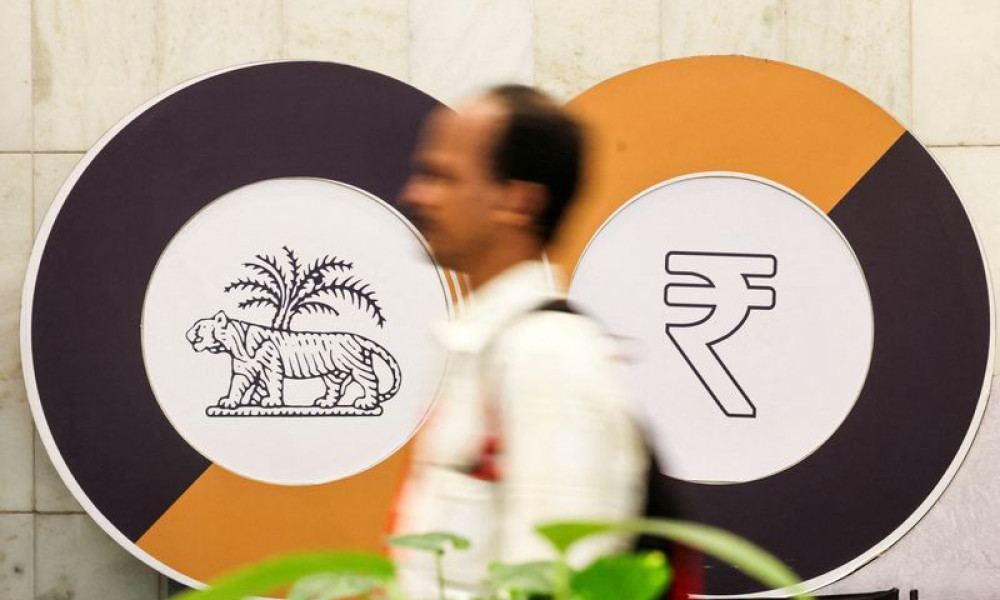
The Indian economy is on a rollercoaster ride, and the rupee is feeling the dips. After hitting a record low last Friday, the Indian rupee is set to remain under pressure. This isn’t just a minor blip; we’re talking about U.S. tariffs and sluggish portfolio flows piling on the pressure, creating a tense situation for the nation’s currency. It’s a critical moment, and everyone is watching closely.
Last Friday, the rupee plummeted to an all-time low of 88.3075 against the U.S. dollar, pushing past the 88 mark. This level was widely seen as a significant technical support, a point that typically triggers heavy intervention from the Reserve Bank of India. But the breach of this barrier signals a deeper struggle, one that has broader implications for the economy.
The rupee’s slide past 88 didn’t happen in a vacuum. It followed Washington’s imposition of additional tariffs on India. This move is a game changer, expected to hurt portfolio flows, impact overall economic growth, and widen India’s trade deficit. It’s a chain reaction, where one action triggers a series of consequences that ripple through the financial landscape.
Foreign outflows from Indian equities have picked up speed, particularly after these new U.S. tariffs. Investors are growing wary, expressing concerns over slower earnings for export-oriented sectors and a less rosy macro outlook. When foreign capital starts to leave, it signals a lack of confidence, which only adds to the downward pressure on the rupee.
Dipti Chitale, CEO of Mecklai Financial Services, summed up the sentiment, stating, “Till the uncertainties around US tariffs settle down, it will continue being a rupee-negative event.” She also anticipates that the Reserve Bank of India might allow the rupee to depreciate further. This strategic depreciation could be a move to maintain competitiveness in the market, a difficult but sometimes necessary decision in volatile times. It’s about finding a balance.
Meanwhile, the bond market is also experiencing its share of tension. India’s 10-year benchmark 6.33% 2035 bond yield settled at 6.5678% last Friday, climbing 2 basis points that day and a significant 15 bps over the previous week. Traders are now expecting the yield to hover in the 6.52% to 6.65% band this week. Their focus is sharply tuned to fiscal developments emerging from New Delhi, as well as an upcoming meeting of the goods and services tax council toward the end of the week. These events are crucial.
Niraj Kumar, chief investment officer at Generali Central Life Insurance, emphasized the need for fiscal action. “Monetary policy has already played its role and has limited fire power left, but the fiscal should act now and calm markets,” he asserted. This highlights a shift in focus, suggesting that the government’s fiscal policies are now front and center in stabilizing the financial markets. The ball is in their court.
Bond market sentiment has already taken a hit due to fears of fiscal slippage. These concerns arose after Prime Minister Narendra Modi unveiled sweeping goods and services tax reforms on August 15. The proposed changes are substantial and aim to simplify the tax structure.
India plans to slash the levy by October, with a proposed shift to a two-rate structure of 5% and 18%. This means scrapping the current 12% and 28% rates. The GST council will meet on Wednesday and Thursday to discuss these critical changes. The decisions made during this meeting will have a profound impact on businesses and consumers alike.
In a surprising turn, India’s economy actually expanded 7.8% year-on-year in the April-June quarter, a pickup from 7.4% in the previous three months. This outperformed economists polled by Reuters, who had forecast a cooled growth of 6.7%. It’s a testament to the underlying resilience of the economy, showing that despite challenges, there are areas of strength.
However, the outlook is not entirely without clouds. Sakshi Gupta, principal economist at HDFC Bank, noted, “Going forward, we could see some slowdown in the second quarter due to spillovers from the tariff impact. For now, our full-year GDP growth estimate for FY26 is retained at 6.3%, with a downward bias.” This cautious optimism reflects the ongoing uncertainties and the potential for external factors to influence domestic growth. The rupee’s future remains a key point of discussion and concern.
This week holds several key events that will shape the financial landscape. In India, we have the August HSBC manufacturing PMI on Monday and the August HSBC services PMI on Wednesday. These indicators provide crucial insights into the health of the manufacturing and services sectors. Meanwhile, the U.S. calendar is packed, featuring the August S&P Global manufacturing PMI final on Tuesday, August ISM manufacturing PMI also on Tuesday, and July factory orders on Wednesday. Other significant reports include July international trade, initial weekly jobless claims, August S&P Global composite and services PMIs, and the highly anticipated August non-farm payrolls and unemployment rate on Friday. All eyes are on how these figures will impact the global and Indian economies, especially regarding the **rupee**.