


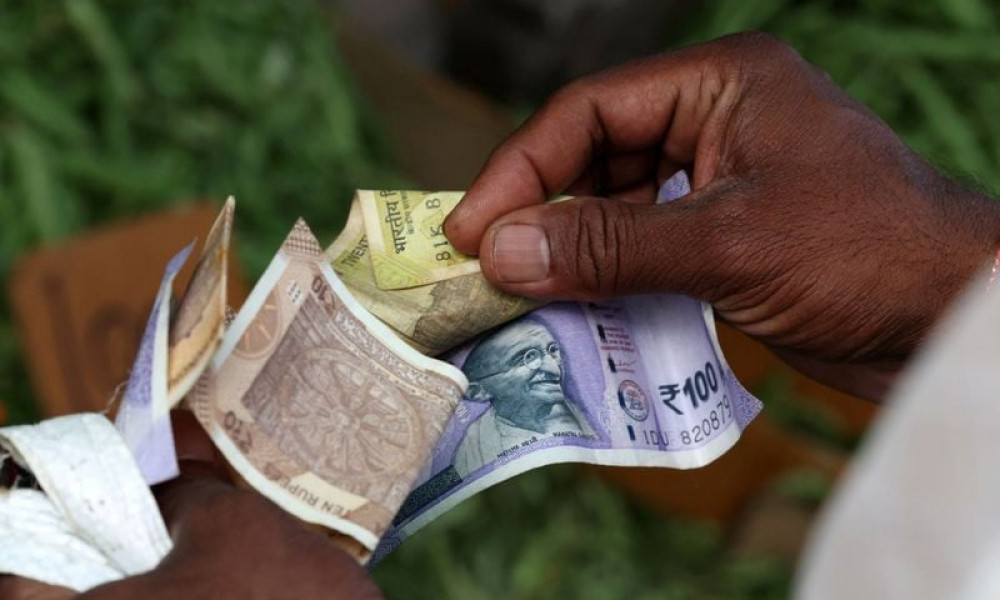
The Indian rupee is poised to dip at Monday’s open, trading with a heavy tone. Pressure mounts from weak risk appetite and lopsided flows. This follows back-to-back sessions where the currency slid to lifetime lows.
One-month non-deliverable forwards suggest an opening range of 90.46 to 90.52 against the U.S. dollar. On Friday, the rupee settled at 90.4150, setting the stage for further weakness.
The rupee hit a new all-time low of 90.55 per dollar on Friday. This marked its second consecutive session of record lows. For the week, the currency lost nearly 0.5%, and year-to-date, it is down 5.6%.
A familiar mix of headwinds continues to dominate the landscape. The lack of a U.S. trade deal has sapped overall market sentiment. Concurrently, capital flows remain weak while the trade deficit widens.
A depreciation bias is encouraging importers to step up their hedging activities. This dynamic leaves exporters reluctant to add dollar supply, exacerbating the imbalance. The flow situation has become notably skewed.
A Mumbai-based currency trader highlighted the daily flow imbalance. The order book is stacked with buying interest, they noted. Exporter offers are thin and spaced out, contributing to the pressure.
The Reserve Bank of India has frequently stepped in to slow the rupee’s slide in recent months. However, its support has appeared less forceful since the currency weakened past the 88.80 level. This change in intervention stance adds to the market’s cautious mood.
On Monday, the rupee must contend with poor risk sentiment. Asian equities dipped, tracking the slide in their U.S. peers from Friday. This global backdrop creates a challenging environment for the currency.
While the softer risk tone has so far left most Asian currencies largely unscathed, the rupee may still struggle. Another currency trader pointed out this specific vulnerability. The rupee’s unique flow dynamics set it apart from regional peers.
Attention this week shifts to key central bank meetings. The Bank of Japan is widely expected to raise rates by 25 basis points to 0.75%. The Bank of England is seen delivering an equal-sized cut to 3.75%.
Meanwhile, the European Central Bank is expected to keep its policy rate unchanged. These decisions will influence global currency flows and risk assessment. Their outcomes are crucial for market direction.
A slate of delayed U.S. economic data is also due this week. This includes the November jobs report and the monthly consumer price index. The data, postponed by the federal shutdown, will be closely watched for clues on Federal Reserve policy.
Key indicators paint a clear picture of the pressure. The one-month non-deliverable rupee forward is at 90.75-80. The onshore one-month forward premium stands at 24 paise.
Foreign investor activity shows continued selling pressure. As per NSDL data, foreign investors sold a net $204.9 million worth of Indian shares on December 11. The same data shows they sold a net $15.5 million worth of Indian bonds on the same day.
The combination of fragile risk tone and skewed flows creates a perfect storm. The rupee’s trajectory remains heavily dependent on these external and internal factors. Market participants are bracing for continued volatility.