


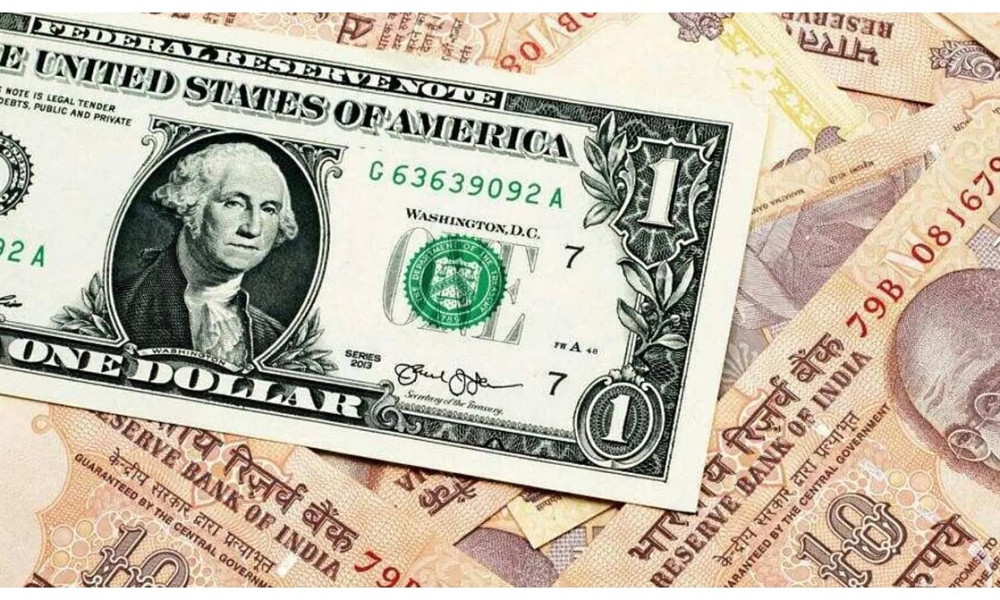
The rupee weakened by 8 paise in early trade on Tuesday, opening at 90.91 before slipping to 90.98 against the US dollar. This decline was driven by strong dollar demand from metal importers and ongoing foreign fund outflows. Investor sentiment took a hit from these persistent pressures.
Forex traders pointed to rising geopolitical uncertainty as a key factor. Renewed expansionary signals from the US have increased risk aversion globally. This environment keeps emerging market currencies, including the rupee, under consistent pressure.
A sluggish domestic stock market exacerbated the situation. This was triggered by a continued exodus of foreign capital from Indian equities. The market’s weakness added to the rupee’s downward momentum during the session.
On Monday, the rupee had already closed 12 paise lower at 90.90. That level was just above its record low closing. The currency has been testing historic lows in recent sessions.
It hit its lowest intra-day level of 91.14 back on December 16, 2025. The lowest closing level recorded on that same day was 90.93. The current trading levels are hovering dangerously close to these historic marks.
Anil Kumar Bhansali of Finrex Treasury Advisors highlighted a major upcoming event. The US Supreme Court is set to rule on the legality of the Trump Tariffs. This decision is expected to directly affect world markets.
Presently, all markets are in a risk-off mode. Investors are flocking to traditional safe havens like gold and silver. This global caution is weighing on riskier assets and currencies.
Meanwhile, the dollar index was trading 0.44 percent lower at 98.95. This measure tracks the greenback against a basket of six major currencies. Even a softer dollar index could not provide strong support for the rupee.
Brent crude futures, the global oil benchmark, edged 0.11 percent higher to USD 64.01 per barrel. Oil price movements are always a critical factor for India’s import bill and currency stability. This slight increase added another layer of pressure.
Domestic equity markets mirrored the currency’s weakness. The Sensex declined 311.33 points to 82,934.85 in early trade. The Nifty also dropped 99.5 points to 25,486.
Foreign institutional investors were major sellers. They offloaded equities worth Rs 3,262.82 crore on Monday alone. This data confirmed the intense selling pressure from overseas funds.
Amit Pabari of CR Forex Advisors provided a stark assessment. Foreign investors have pulled over USD 3 billion from Indian equities so far in January. This steady outflow has made the rupee increasingly sensitive to even modest dollar demand.
With capital moving out, defending stability becomes a much harder task. The rupee’s vulnerability is heightened by these persistent outflows. Every dollar demand now has a magnified impact.
Pabari further outlined a technical perspective. Ongoing global uncertainty, combined with a sustained break above 91.07, could be significant. Such a break might pave the way for a move toward the 91.70-92.00 zone.
This potential decline could occur unless offset by active intervention from the RBI. The central bank’s role is now crucial for stability. On the downside, any corrective move is likely to find initial support in the 90.30-90.50 range.