


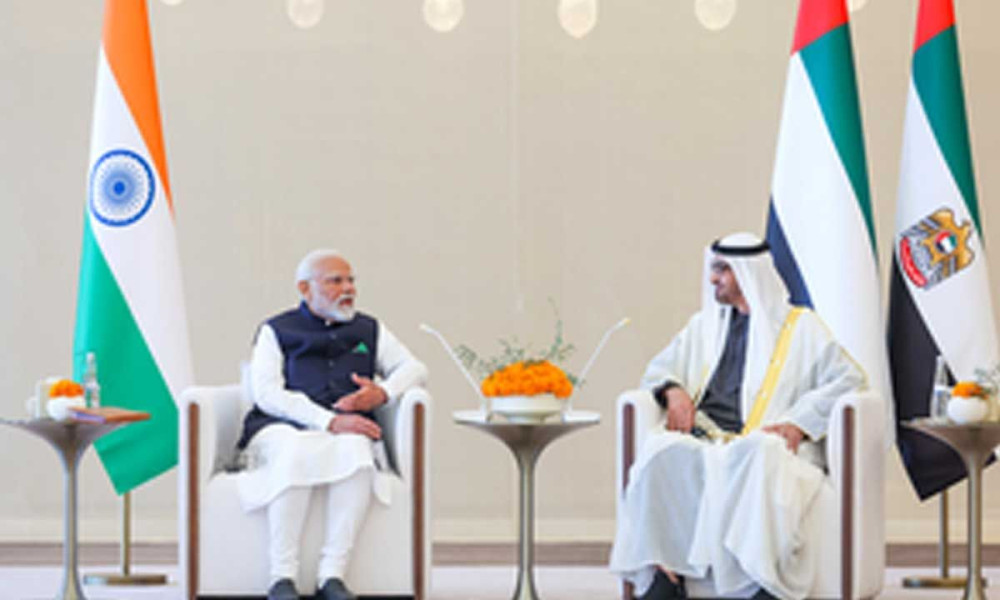
Prime Minister Narendra Modi spoke with UAE President Sheikh Mohamed bin Zayed Al Nahyan on Sunday. He strongly condemned recent attacks targeting the Gulf nation. The Prime Minister expressed India’s solidarity during what he described as a difficult time.
In a post on social media platform X, PM Modi conveyed his condolences for the loss of lives. He reiterated India’s firm support for the UAE. The message underscored a stance of unwavering solidarity.
He specifically thanked the UAE leadership for ensuring the well-being of the large Indian community residing there. This acknowledgment highlights the importance of the diaspora. The Prime Minister also expressed support for de-escalation and regional peace.
India and the UAE share exceptionally close strategic and economic ties. Cooperation spans vital areas like trade, energy, defence, and counter-terrorism. The diaspora engagement remains a cornerstone of the relationship.
The UAE is home to one of the world’s largest Indian expatriate communities. This community plays a key role in strengthening people-to-people relations. Their safety and prosperity are of paramount importance to India.
Further details of the high-level conversation were not immediately available. The outreach, however, signals India’s active diplomatic engagement. It comes amid a period of significant regional tension.
The Prime Minister’s actions reflect a commitment to regional stability. His expression of solidarity was both timely and significant. It reinforces the deep bonds between the two nations.
Also on Sunday, PM Modi chaired a high-level meeting of the Cabinet Committee on Security. This meeting was held late in the evening in the national capital. Government sources confirmed the urgent gathering.
The CCS is the apex decision-making body on security and strategic matters. Its convening followed a rapidly deteriorating geopolitical situation in the Middle East. Recent coordinated airstrikes have intensified regional tensions.
The meeting included key ministers and security officials. Defence Minister Rajnath Singh and Home Minister Amit Shah were present. External Affairs Minister S. Jaishankar and Finance Minister Nirmala Sitharaman also attended.
National Security Adviser Ajit Doval and Foreign Secretary Vikram Misri were part of the discussions. The assembly of such senior figures underscores the gravity of the situation. Global security concerns are notably elevated.
PM Modi returned to Delhi around 9:30 p.m. to chair this meeting. He concluded a two-day tour of four states and a union territory. The immediate shift to security matters highlights governmental prioritization.
The urgent CCS meeting is seen as a direct response to developments in West Asia. This includes recent US-Israeli strikes on Iranian targets. Subsequent retaliatory actions have raised alarm.
Reports have indicated significant escalations, including the killing of a senior Iranian leader. These events heighten fears of a broader regional conflict. India’s leadership is clearly monitoring the situation closely.
The dual actions of diplomacy and security review demonstrate a comprehensive approach. India’s solidarity with partners and internal preparedness are being addressed simultaneously. The focus remains on stability and the safety of Indian citizens abroad.