


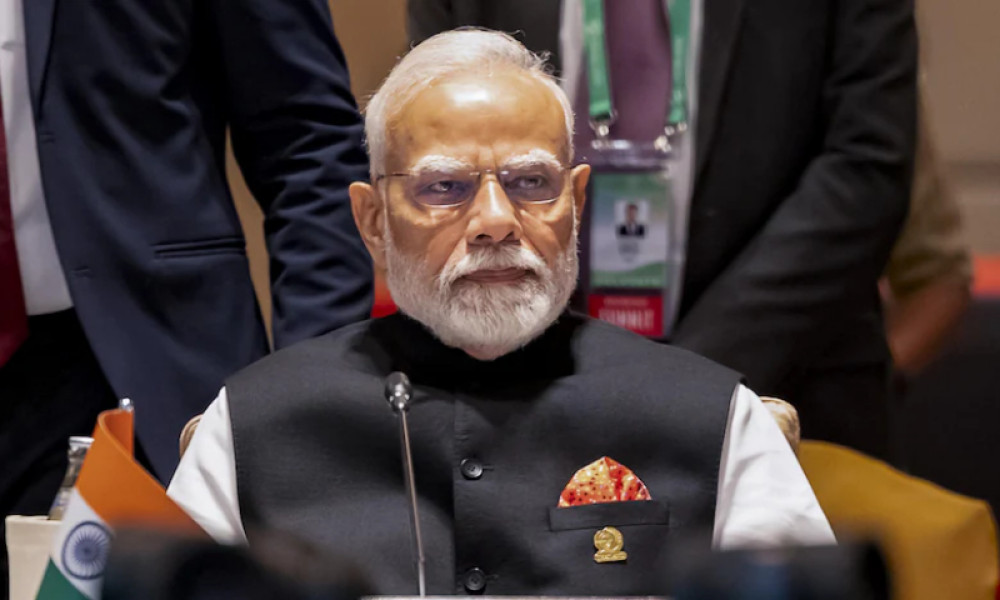
Big news on the economic front! Prime Minister Narendra Modi is enthusiastically welcoming a brand new, simplified two-tier Goods and Services Tax (GST) structure. This significant change is set to roll out on September 22, promising a fresh wave of economic reform. It’s a move that’s catching everyone’s attention, and for good reason.
The Prime Minister sees this as a game changer. He believes this new approach, which received the green light from the GST Council, will bring substantial benefits across the board. Think farmers, those bustling MSMEs, the hardworking middle class, women entrepreneurs, and the vibrant youth of the nation. It’s designed to touch the lives of many, making things just a little bit easier and more efficient.
Modi didn’t hold back his excitement, taking to social media platform X to share his thoughts. He described the decision as a crucial step towards what he calls “next-generation GST reforms.” This isn’t just a minor tweak; it’s being pitched as a forward-thinking transformation.
The government has apparently been hard at work, meticulously crafting a detailed proposal. Their mission? To rationalize GST rates and streamline processes. The core objectives? To improve the ease of living for citizens and, crucially, to strengthen the overall economy. It’s about making everyday life smoother and bolstering India’s financial backbone.
Finance Minister Nirmala Sitharaman shed more light on the new structure late on Wednesday evening. She confirmed that the existing 12% and 18% slabs are being merged. This means a more straightforward, two-rate system: 5% and 18%. Simplicity is key here, reducing complexity for businesses and consumers alike.
What about the higher rates? Well, most items that currently sit in the 28% category are getting a welcome downgrade, moving into those lower rate brackets. Of course, there will still be a special 40% slab. This top-tier rate is reserved for very select luxury goods. We’re talking high-end cars, tobacco products, and cigarettes. So, don’t expect those opulent purchases to get cheaper anytime soon.
Sitharaman emphasized that these reforms were designed with the “common man” firmly in focus. This wasn’t some abstract economic theory; it was about tangible improvements for everyday citizens. She highlighted that tax rates on many daily-use products have been significantly reduced. This reduction in the GST is expected to put more money back into people’s pockets, making essential goods more affordable.
Some sectors are getting a particular boost. The agriculture sector, the backbone of India, is set to gain significantly. Labour-intensive industries, which provide so many jobs, will also see positive impacts. And let’s not forget healthcare, a vital sector for everyone, which is also expected to benefit from these changes in the GST.
The new structure includes some surprising, but welcome, changes for consumers. Imagine your morning parathas, those trusty erasers, or even maps and pencil sharpeners. They will now attract zero **GST**. That’s right, completely tax-free! Even mundane items get a break.
Then there’s a whole host of products moving into the more affordable 5% slab. Items like feeding bottles, tableware for your home, umbrellas to shield you from the rain, and even bicycles for your commute. Think about bamboo furniture, stylish combs, and even common utensils. All these are seeing their **GST** drop from 12% to 5%. It’s a noticeable difference that benefits daily purchases.
And it doesn’t stop there. Products that are part of most people’s daily bathroom routines are also seeing reductions. Shampoo, toothpaste, toothbrushes, soap, talcum powder, and hair oil – all these essentials will now have their **GST** cut from 18% all the way down to 5%. This is a significant decrease that will be felt by millions of households across the country.
The timing of these revised rates is quite symbolic too. They are slated for implementation from September 22, which conveniently coincides with the beginning of Navratri. It’s a festive season for many, and these new **GST** rates could add to the celebratory mood, making purchases a little lighter on the wallet. This structural change to **GST** is poised to reshape the economic landscape, signaling a new era of reform.