


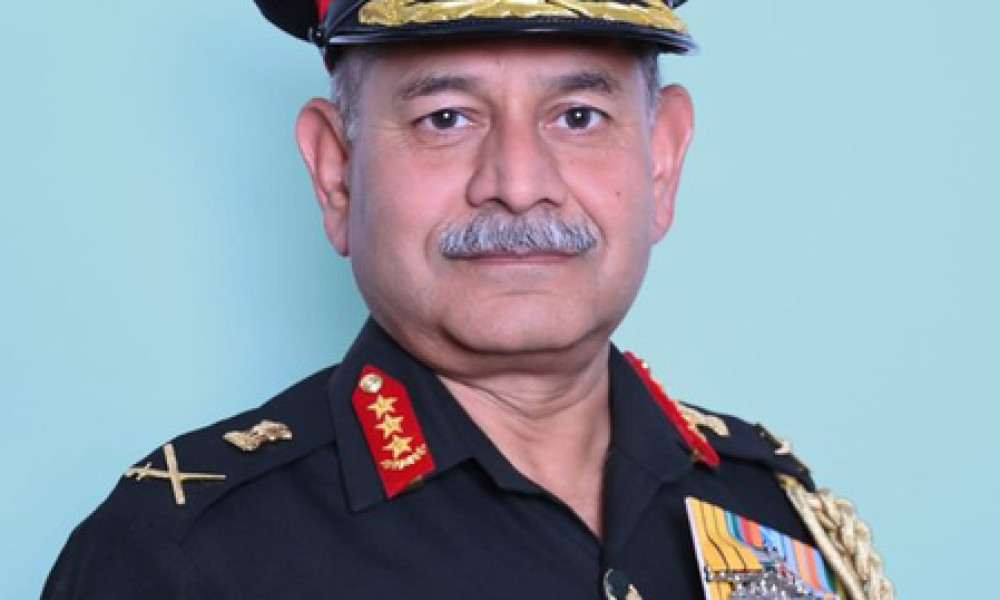
Army Chief Gen. Upendra Dwivedi recently opened up about the complexities of Operation Sindoor, comparing it to a high-stakes game of chess. Speaking at an event at IIT-Madras on August 4, he highlighted the unpredictable nature of the mission, emphasizing that while the conflict lasted only four days, it could have prolonged into a much longer battle. The video of his address was later shared by the Army, shedding light on the strategic maneuvers behind the operation.
Operation Sindoor, launched in May as a response to the April 22 Pahalgam attack, targeted terror infrastructure in Pakistan and Pakistan-occupied Kashmir (PoK). The military action quickly escalated into a four-day conflict before both sides reached an understanding on May 10. Gen. Dwivedi stressed that the mission was far from conventional. “We did not know what the enemy’s next move would be,” he said, drawing parallels to the calculated unpredictability of chess.
The Army chief also touched upon the psychological and narrative aspects of warfare. He pointed out how perceptions of victory can be manipulated, citing Pakistan’s internal narrative as an example. “If you ask a Pakistani whether they lost or won, they might say their Army chief became a Field Marshal, so they must have won,” he remarked. This underlines the importance of narrative management in modern conflicts, where controlling the story is as crucial as winning on the ground.
Social media and strategic messaging played a pivotal role in shaping public opinion during the operation. Gen. Dwivedi explained how India countered Pakistan’s propaganda by leveraging digital platforms. The first message, “justice done,” reportedly garnered massive global engagement, proving the power of timely and precise communication. “This is how you influence populations—your own, the adversary’s, and the neutral observers,” he added.
Beyond the immediate conflict, the Army chief hinted at future challenges. Without naming any country, he expressed concerns about potential threats that could involve multiple nations. “Next time, it may be much more,” he cautioned. “Whether that country will act alone or with support, we don’t know. But I have a strong feeling they won’t be alone.” This foresight underscores the need for constant vigilance and adaptability in defense strategy.
Gen. Dwivedi’s analogies to chess and cricket resonated deeply, illustrating how military operations require both tactical precision and mental agility. The abrupt halt of the conflict after four days, much like a test match ending early, didn’t diminish its significance. Instead, it highlighted the delicate balance of power and perception in modern warfare. Operation Sindoor wasn’t just about firepower—it was a masterclass in strategy, deception, and influence.