


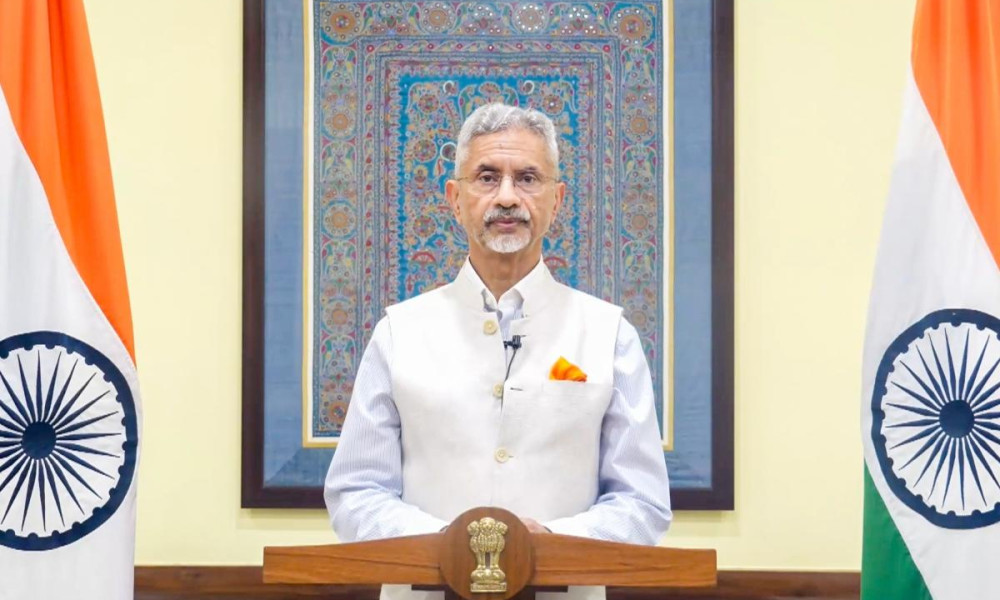
External Affairs Minister S. Jaishankar made a striking statement during a crucial all-party meeting. He declared that India does not see itself as a ‘dalaal’ nation, a term implying a broker or middleman. This remark directly contrasted India’s stance with that of Pakistan.
The meeting focused on the escalating West Asia conflict, specifically tensions between the United States and Iran. It was a gathering of significant political weight, chaired by Defence Minister Rajnath Singh. Leaders from across the spectrum came together to discuss the volatile situation.
Jaishankar’s comments were unequivocal. He stressed that India would not position itself as an intermediary in this geopolitical dispute. The firm rejection of a mediator role was a clear policy declaration.
This stance emerges amid active diplomatic maneuvering by other nations. Countries like Pakistan and Turkey have been attempting to present themselves as potential mediators. Their goal is to ease the rising tensions between the US and Iran.
The all-party meeting saw high-level attendance from the ruling coalition. Union Home Minister Amit Shah and Finance Minister Nirmala Sitharaman were among the key figures present. Parliamentary Affairs Minister Kiren Rijiju also attended the discussions.
Opposition parties were well-represented at the meeting. The Congress party sent Mukul Wasnik and Tariq Anwar. The Samajwadi Party was represented by Dharmendra Yadav and Javed Ali Khan.
Other political voices included CPI(M) leader John Brittas and DMK’s P. Wilson. AAP’s Sanjay Singh and LJP’s Arun Bharti also participated in the meeting. JD(U) sent Union Minister Rajiv Ranjan Singh and working president Sanjay Jha.
Notably, the Trinamool Congress chose not to send a representative. The broad attendance underscored the meeting’s importance for national consensus on foreign policy. The discussion centered on a conflict with far-reaching implications.
Meanwhile, Pakistan has reportedly offered to mediate between the US and Iran. This bid aims to help facilitate a resolution to the ongoing conflict. The offer places Pakistan in a potential broker role that India has explicitly rejected.
US President Donald Trump shared a post by Pakistan’s Prime Minister Shehbaz Sharif. The post expressed Pakistan’s willingness to help resolve the crisis. This interaction highlights the active mediation efforts from Islamabad.
Jaishankar’s ‘dalaal’ comment draws a sharp line in diplomatic approach. It defines India’s position as one of principle rather than opportunism. The term itself carries a weighty connotation in the subcontinent’s political lexicon.
The meeting served as a platform to articulate this distinct foreign policy vision. It was not merely a briefing but a statement of intent. India’s role in global affairs is being consciously shaped by such decisions.
The West Asia conflict remains a critical flashpoint with global consequences. How nations choose to engage defines their international standing. India’s rejection of a mediator role is a calculated strategic choice.
This choice contrasts sharply with the path taken by its neighbor. The different approaches of India and Pakistan are now in clear relief. The geopolitical landscape continues to evolve with each diplomatic move.