


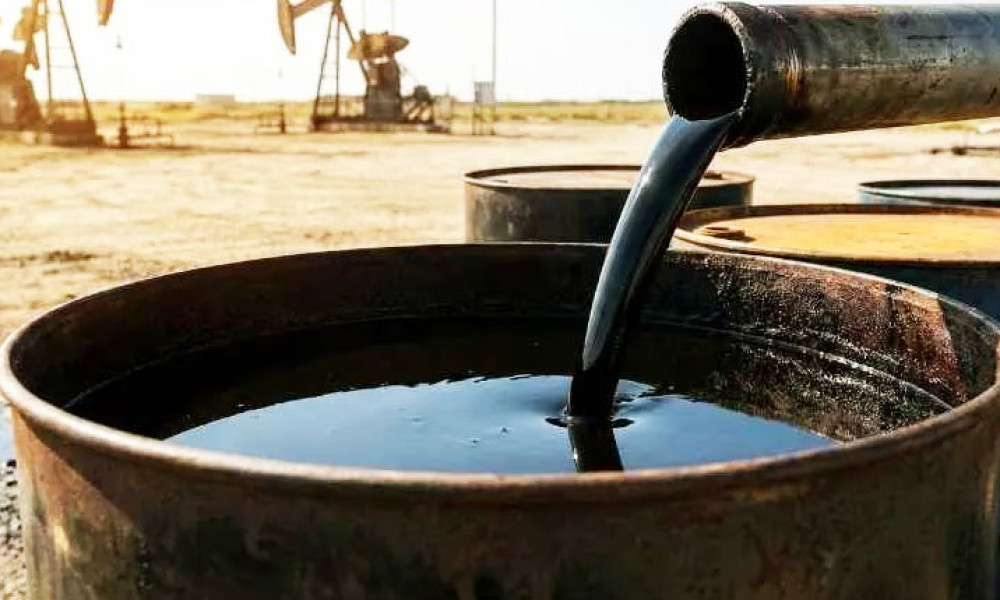
Global oil prices traded lower on Friday. This followed a key signal from the United States regarding Iranian crude sanctions. The move aims to help secure shipping through the vital Strait of Hormuz.
Brent crude futures fell sharply, dropping as much as 3.39 percent. They hit an intra-day low of $104.96 per barrel. US WTI crude futures also declined, trading 3.22 percent lower at $92.47.
The drop was triggered by comments from US Treasury Secretary Scott Bessent. He indicated Washington may consider easing restrictions on Iranian oil already at sea. This effort is designed to help cool global prices.
In a television interview, Bessent provided specific details. He said the US could unsanction around 140 million barrels of Iranian oil currently on the water in the coming days. He noted the US has allowed Iranian crude to continue flowing from the Gulf.
Further flexibility could be explored depending on market conditions. Bessent also clarified the US is not targeting Iran’s energy infrastructure. He stated the US retains multiple levers to influence global oil supply.
This news provided some relief to markets. However, the broader context is crucial. Crude prices have surged sharply amid ongoing geopolitical tensions.
As the West Asia conflict entered its 21st day, Brent crude rose nearly 40 percent. It climbed from $77.74 on March 2 to $108.65 on March 19. The recent decline represents only a slight cooling from those highs.
Analysts point to signs of de-escalation in the Middle East. Easing concerns over disruptions to Iran’s energy infrastructure have also played a role. This has reduced the risk premium baked into oil markets.
Despite the pullback, prices remain elevated. These high levels continue to exert significant pressure on economies like India’s, weighing on the rupee.
Meanwhile, Indian equity markets bounced back strongly. Frontline indices traded over 1 percent higher in morning trade. The Sensex rose nearly 1,000 points, or 1.34 percent.
The Nifty gained 1.38 percent, or around 300 points. This domestic rally contrasted with mixed global cues. Wall Street had ended the previous session in the red.
In the US, the S&P 500 closed 0.27 percent lower. The Nasdaq declined 0.28 percent. The divergence highlights the complex interplay between oil, geopolitics, and global finance.
The potential easing of sanctions is a significant development. It shows a pragmatic approach to managing supply and inflation. Markets are reacting to every hint of change.
Oil remains a central pillar of the global economy. Its price movements ripple through currencies, stocks, and trade balances. Today’s events are a clear reminder of that interconnected reality.