


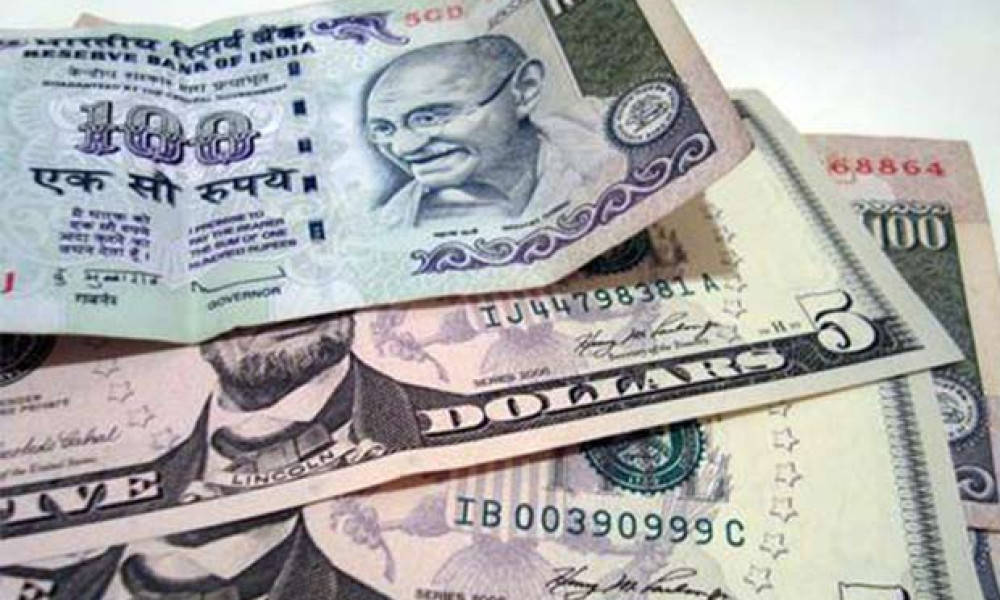
The rupee weakened by 7 paise to 89.43 against the US dollar in early trade on Friday. This decline was influenced by a strong greenback and higher crude oil prices internationally. Forex experts noted the currency faced additional pressure from foreign fund withdrawals. Investors remained cautious ahead of GDP growth data for the July-September period.
At the interbank foreign exchange market, the rupee opened at 89.41. It quickly slipped to 89.43 in initial deals, marking a 7 paise drop from its previous close. This movement reflects ongoing volatility in currency markets.
The rupee had depreciated 14 paise to settle at 89.36 against the US dollar on Thursday. This recent trend highlights the persistent challenges for the Indian currency. Factors like global economic shifts continue to impact its performance.
Meanwhile, the dollar index rose 0.04 percent to 99.56. This index measures the greenback’s strength against a basket of six major currencies. Its uptick signals increased demand for the US dollar.
Analysts linked the greenback’s strength to higher demand from importers and banks. These entities are settling month-end trade payments, boosting the dollar’s appeal. Such activities often drive short-term currency fluctuations.
Brent crude futures climbed 0.41 percent to USD 63.60 per barrel. As a global oil benchmark, its rise adds to import cost pressures. This can further strain currencies like the rupee that rely on oil imports.
On the domestic front, the Sensex gained 91.01 points to 85,811.39 in early trade. The Nifty also rose 18.85 points to 26,234.55. These gains show some resilience in equity markets despite currency woes.
Foreign institutional investors were net sellers, offloading equities worth Rs 1,255.20 crore on Thursday. This withdrawal of foreign funds contributed to the rupee’s weakness. It underscores how capital flows affect currency stability.
The interplay between the rupee and the dollar remains a key focus. A strong greenback often leads to depreciation in emerging market currencies. India’s rupee is no exception to this dynamic.
Higher crude oil prices exacerbate the situation by increasing India’s import bill. This can widen the trade deficit and put downward pressure on the rupee. It’s a cyclical challenge for the economy.
Investor caution ahead of GDP data announcements added to the muted sentiment. The July-September growth figures are eagerly awaited for economic insights. They could influence future currency and market trends.
Despite the rupee’s slip, domestic equities showed modest gains. This divergence highlights how different asset classes can react uniquely to the same factors. It’s a reminder of market complexity.
The rupee’s movement against the dollar will continue to be watched closely. Global factors like oil prices and dollar strength play significant roles. Domestic policies and data releases also shape outcomes.
Overall, the early trade session painted a mixed picture for financial markets. Currency weakness contrasted with stock market gains, reflecting diverse investor responses. Monitoring these trends is essential for understanding economic health.