


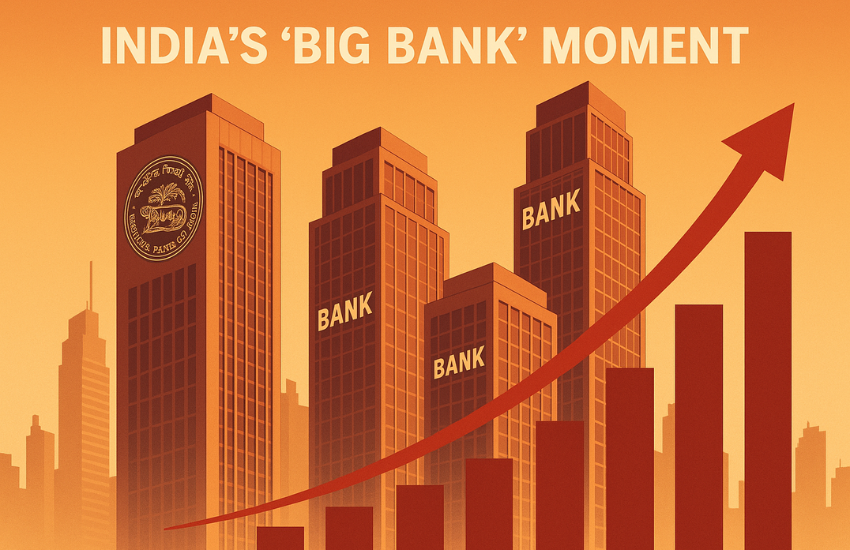
India is preparing for what experts are calling a “Big Bank” moment, as the Reserve Bank of India (RBI) and the central government set a clear vision for the future of the country’s banking system. The goal is to develop large, globally competitive banks capable of supporting India’s economic growth ambitions leading up to 2047—when India aims to become a developed economy.
This move is not just about combining public sector banks (PSBs). It’s about building strong, well-capitalized, technology-driven banking institutions that can finance large infrastructure, manufacturing, clean energy, digital innovation, logistics, and industrial expansion projects that India is planning on a massive scale.
Why Is This Important?
1. Larger Banks Can Finance Big Projects
Small and mid-sized banks often lack the balance sheet strength to fund multi-billion-dollar infrastructure and technology projects. Bigger banks mean bigger lending capacity.
2. Improved Stability and Global Presence
When banks are stronger financially and technologically, they can:
Handle global risks better
Participate in international trade and finance
Bring Indian companies smoother access to foreign markets
3. A Step Toward Becoming a Global Economic Power
For India to compete with economies like the US and China, it needs banks that match global scale — similar to JPMorgan Chase, HSBC, ICBC, and Mitsubishi UFJ.
The Role of Public Sector Bank Consolidation
Over the last few years, the government has already merged several PSBs to:
Reduce duplication of operations
Improve efficiency and governance
Strengthen balance sheets
Examples of previous PSB mergers:
| Year | Merged Banks | Resulting Entity |
|---|---|---|
| 2017 | SBI and 5 associate banks | State Bank of India became a global-scale lender |
| 2019–20 | 10 PSBs merged into 4 | Punjab National Bank, Union Bank, Canara Bank, Indian Bank were strengthened |
What This Means for India’s Future
If executed effectively, this strategy will help India:
| Growth Target | How Big Banks Support It |
|---|---|
| $5 Trillion Economy | Higher lending power and project financing |
| Infrastructure Push | Financing railways, ports, highways, EV, digital infra |
| Manufacturing Expansion | Strong credit support for MSMEs and industrial clusters |
| Global Competitiveness | More Indian banks in global top rankings |
This is not just a financial reform, but a nation-building step.