


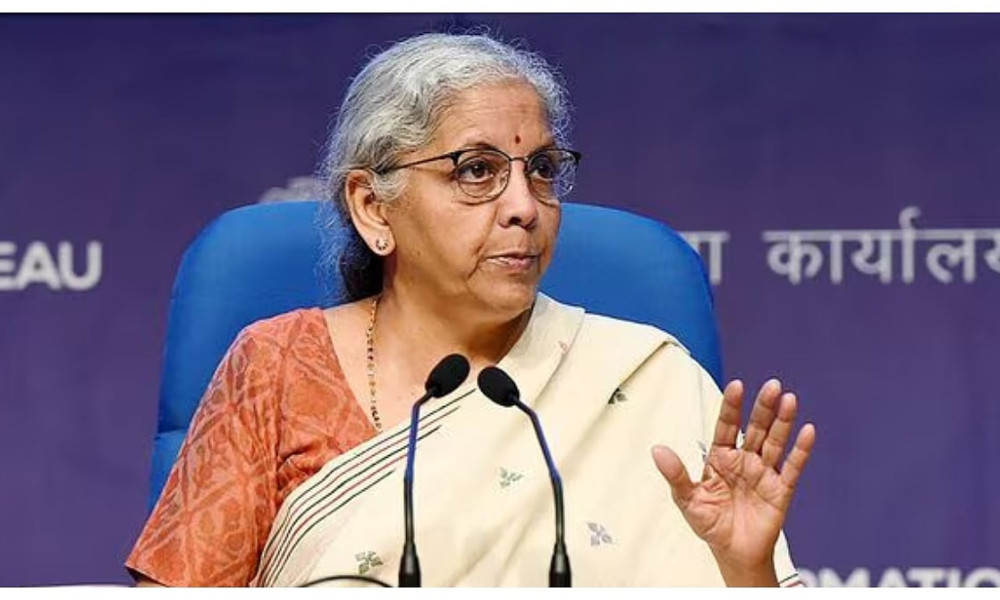
A Kolkata-based civil society group has strongly refuted Finance Minister Nirmala Sitharaman’s recent comments about bank nationalisation. The Bank Bachao Desh Bachao Manch contested her assertion that nationalisation failed to meet its objectives. They cautioned the government against pursuing privatisation of public sector banks.
In a detailed letter to the finance minister, the group defended the 1969 nationalisation decision. They argued it fundamentally reshaped India’s financial system by ensuring institutional credit access. Private banks had largely ignored rural and semi-urban areas before this historic move.
The nationalisation transformed banking accessibility across India. Public sector banks became financial lifelines for underserved communities. They brought formal banking to regions previously excluded from economic development.
BBDBM claimed economic progress since 1969 can be single-handedly attributed to public sector banks. They described PSBs as the backbone of India’s financial architecture. This foundation supports the nation’s economic growth and stability.
Finance Minister Sitharaman recently addressed concerns about privatisation. She allayed apprehensions that it would hurt financial inclusion and national interest. Her comments sparked this vigorous response from civil society.
Public sector banks maintain significant market presence today. They account for over 60 percent of total deposits and advances nationwide. Their extensive network serves diverse economic sectors.
Rural banking remains dominated by public sector institutions. PSBs operate more than 90 percent of rural branches across India. These branches serve farmers, low-income households, and small businesses daily.
Financial inclusion achievements highlight PSB success. Banks opened more than 53.1 crore Jan Dhan accounts under government initiatives. Over 31 crore accounts serve rural and semi-urban areas.
Women benefit significantly from these banking services. Fifty-five percent of Jan Dhan accounts belong to women nationwide. This represents substantial progress in financial gender inclusion.
Public sector banks implement crucial government schemes effectively. They administer PMJJBY, PMSBY, Mudra, and PM SVANidhi programs. These initiatives provide insurance coverage and loan access to millions.
Corporate loan write-offs present a contrasting picture. PSBs wrote off over Rs 12.08 lakh crore between FY16 and FY25. Total write-offs across scheduled commercial banks exceeded Rs 16.35 lakh crore.
Large corporate borrowers received substantial write-off benefits. More than Rs 9.26 lakh crore pertained to corporate and service sector borrowers. Recovery rates remained barely around 20.5 percent.
The group alleges government motives behind criticism. They claim the government portrays nationalisation as failure to enable bank transfers to favored business conglomerates. This strategy could reshape banking ownership.
Privatisation risks financial sovereignty and credit access. The group warns it would endanger economic independence and restrict poor citizens’ banking access. Rural communities might lose vital financial services.
The debate continues as both sides present contrasting perspectives. Banking reform remains a contentious national issue affecting millions of Indians. Future decisions will shape financial inclusion for generations.