


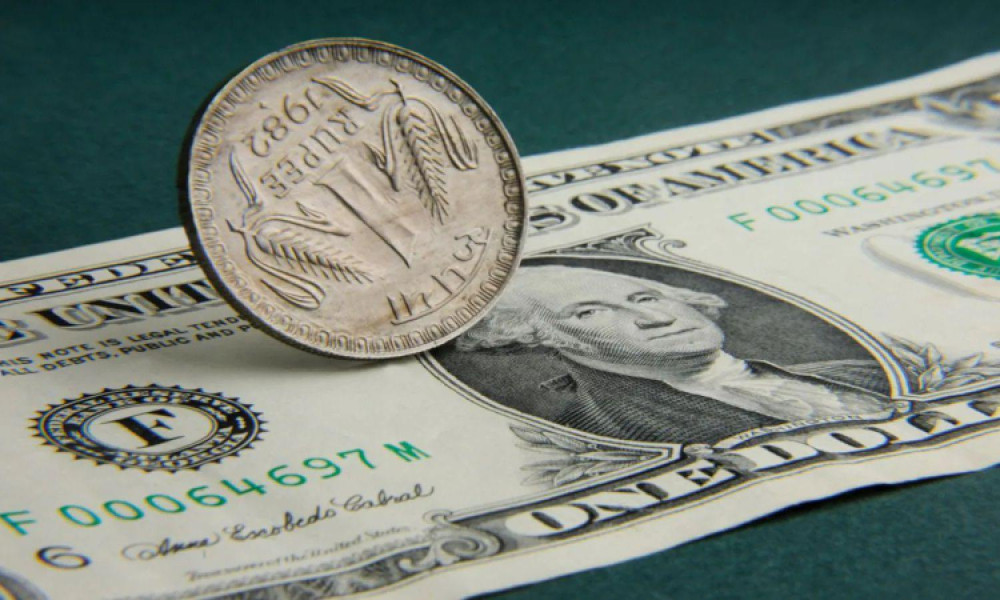
The Indian rupee is facing some serious headwinds, and it’s a topic on everyone’s mind. After breaching the critical 88-per-dollar barrier last week, the currency is expected to remain under significant stress. This move has emboldened speculators, suggesting that downside risks for the rupee are very much alive and well.
Looking at the 1-month non-deliverable forward, it appears the rupee will open with little change from its 88.1950 close on Friday. That’s when the currency plunged to a new record low of 88.3075. It’s safe to say there’s a lot of apprehension in the market.
The rupee’s slide past 88 on Friday caught many market participants off guard. Most had anticipated a more forceful intervention from the Reserve Bank of India, particularly following the imposition of additional U.S. tariffs last week. The lack of aggressive defense was a surprise to many.
But why did the RBI hold back? One banker offered some insight, suggesting the central bank might have opted against vigorously defending the 88 level. This could be due to heavy equity outflows and the significant dollar demand coming from speculators. Another perspective is that the central bank might be signaling it won’t defend specific levels at all costs, a strategic shift that could have long-term implications for the rupee.
Indeed, quite a few factors played into the RBI’s apparent decision to let the rupee drop past 88. Foreign investors sold nearly $950 million in equities on Friday. Combine that with substantial importer and speculative dollar demand, plus broader “macro considerations,” and the picture clarifies. A senior treasury official at a mid-sized private sector bank explained these combined forces made it challenging for the RBI to maintain the previous levels.
Now that the breach is behind us, the risk-reward scenario for the rupee is decidedly skewed toward the downside. This means further depreciation is a real possibility. The market’s immediate focus has shifted dramatically. Everyone is now trying to identify the specific level at which the RBI will finally draw a line in the sand and signal it will not tolerate further losses for the rupee.
Amidst all this, India’s June-quarter GDP managed to beat forecasts. However, traders are cautioning that this positive news is unlikely to provide much support for the **rupee**. The economic data, while seemingly good on the surface, has deeper complexities.
Madhavi Arora, lead economist at Emkay Global, dug into the details. She noted that the upside was primarily a reflection of exceptionally soft deflators, front-loaded government spending, and pre-tariff export frontloading. Her warning is clear: these supportive factors may reverse in the coming quarters, potentially removing some of the current, albeit limited, economic cushion for the **rupee**.
The broader Asian market isn’t offering much help either. Most Asian currencies weakened at the start of the week, providing little to no support to the **rupee**. This widespread weakness means the Indian currency isn’t alone in its struggles, yet it doesn’t alleviate its specific pressures either.
This week, attention will largely be on a raft of U.S. labor data. This data is crucial because it will guide expectations for how deep the Federal Reserve plans to cut interest rates later this year. Investors will be carefully parsing U.S. job openings and private payrolls figures. All eyes will then turn to Friday’s critical nonfarm payrolls data, which could significantly influence global currency markets, including the trajectory of the **rupee**.