


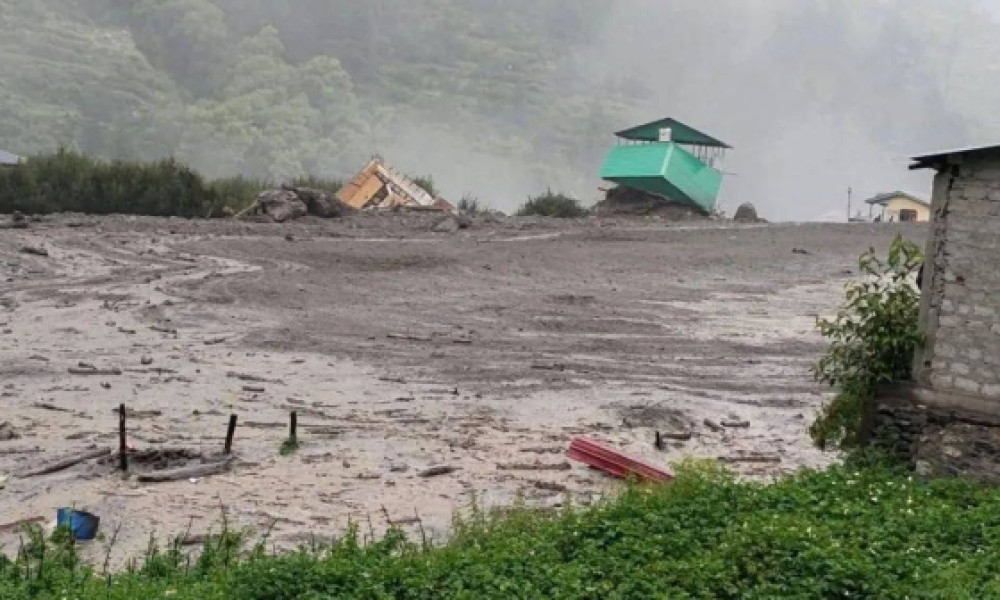
The recent flash floods in Uttarakhand’s Kheer Ganga river brought back painful memories for Geeta, a survivor of the 2013 Kedarnath tragedy. She lost four family members in that disaster, one of India’s deadliest since the 2004 tsunami. “The same thing happened in Kedarnath,” she whispered, watching the news unfold from her new home in Delhi, where she now works as a domestic helper. For her, every new disaster in the Himalayas feels like reopening an unhealed wound.
The 2013 Kedarnath catastrophe was triggered by extreme rainfall—over 300 mm in just 24 hours—combined with rapid snowmelt. This caused the Chorabari Lake’s moraine dam to burst, leading to devastating floods that claimed around 5,700 lives. Geeta and her family fled to Delhi to rebuild their lives, but the trauma lingers with every fresh disaster.
Over the past decade, Uttarakhand has faced a relentless cycle of calamities. In 2019, cloudbursts in Uttarkashi killed 19. In 2021, a glacier collapse in Chamoli swept away hydropower projects, leaving 204 missing. Just a year later, flash floods near Dehradun wrecked entire stretches of land. Now, Dharali’s tragedy echoes the same patterns.
Experts say the latest disaster shares alarming similarities with Chamoli. “Rainfall is only part of the problem. We need better data to understand the full picture,” says Y P Sundriyal, a professor at HNB Garhwal University. Research published last month confirms a troubling trend: extreme rainfall events in Uttarakhand have surged since 2010, turning the region into a hotspot for climate-driven disasters.
The Himalayas’ natural vulnerability doesn’t help. Steep slopes, fragile geology, and tectonic instability amplify every weather event. Combine this with unchecked construction, deforestation, and poorly planned tourism, and the risks skyrocket. Environmentalists like Anoop Nautiyal argue that authorities have ignored repeated warnings, allowing reckless development to continue.
Climate campaigner Harjeet Singh calls it a “deadly mix” of climate extremes and human negligence. The numbers back him up—between 2020 and 2023, Uttarakhand saw 183 monsoon disasters, mostly landslides and floods. Nationwide, Himalayan states recorded extreme weather on 822 days over three years, costing 2,863 lives.
Glacial threats are another looming crisis. Uttarakhand hosts over 1,260 glacial lakes, 13 of which are high-risk. The Wadia Institute of Himalayan Geology has raised alarms about melting glaciers and unstable lakes, but enforcement remains weak. NDMA guidelines from 2020 recommended stricter monitoring and land-use controls, yet implementation lags.
As Uttarakhand grapples with yet another tragedy, the question lingers: will policymakers act before the next disaster strikes, or will the warnings keep falling on deaf ears?